Euryzygoma
| Euryzygoma Status: Uitgestorven Fossiel voorkomen: Plioceen | ||||||||||||
|---|---|---|---|---|---|---|---|---|---|---|---|---|
 | ||||||||||||
| Taxonomische indeling | ||||||||||||
| ||||||||||||
| Geslacht | ||||||||||||
| Euryzygoma Longman, 1921 | ||||||||||||
| Typesoort | ||||||||||||
| Euryzygoma dunense | ||||||||||||
 | ||||||||||||
| Euryzygoma dunense | ||||||||||||
Afbeeldingen op  Wikimedia Commons Wikimedia Commons | ||||||||||||
| ||||||||||||

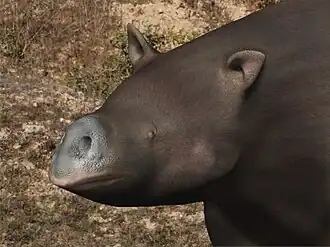
Euryzygoma[1] is een geslacht van uitgestorven buideldieren uit de familie Diprotodontidae van de orde Diprotodontia.
Bronnen, noten en/of referenties
Literatuur
- Archer, M. 1977b. Origins and subfamilial relationships of Diprotodon (Diprotodontidae, Marsupialia). Memoirs of the Queensland Museum 18, 37-39.
- Black, K. and Mackness, B. 1999. Diversity and relationships of diprotodontoid marsupials. Australian Mammalogy 21, 20-21; 34-45.
- De Vis, C. W. 1888b. On a supposed new species of Nototherium. Abstract of the Proceedings of the Linnean Society of New South Wales for December 28th, 1887: v.
- Longman, H. 1921. A new genus of fossil marsupials. Memoirs of the Queensland Museum 7, 65-80
Noten
- ↑ Fossilworks: Euryzygoma. www.fossilworks.org. Gearchiveerd op 2-8-2022. Geraadpleegd op 13-04-2023.